
Rocky Horror - An Ongoing Initiation
Rose Tint My World

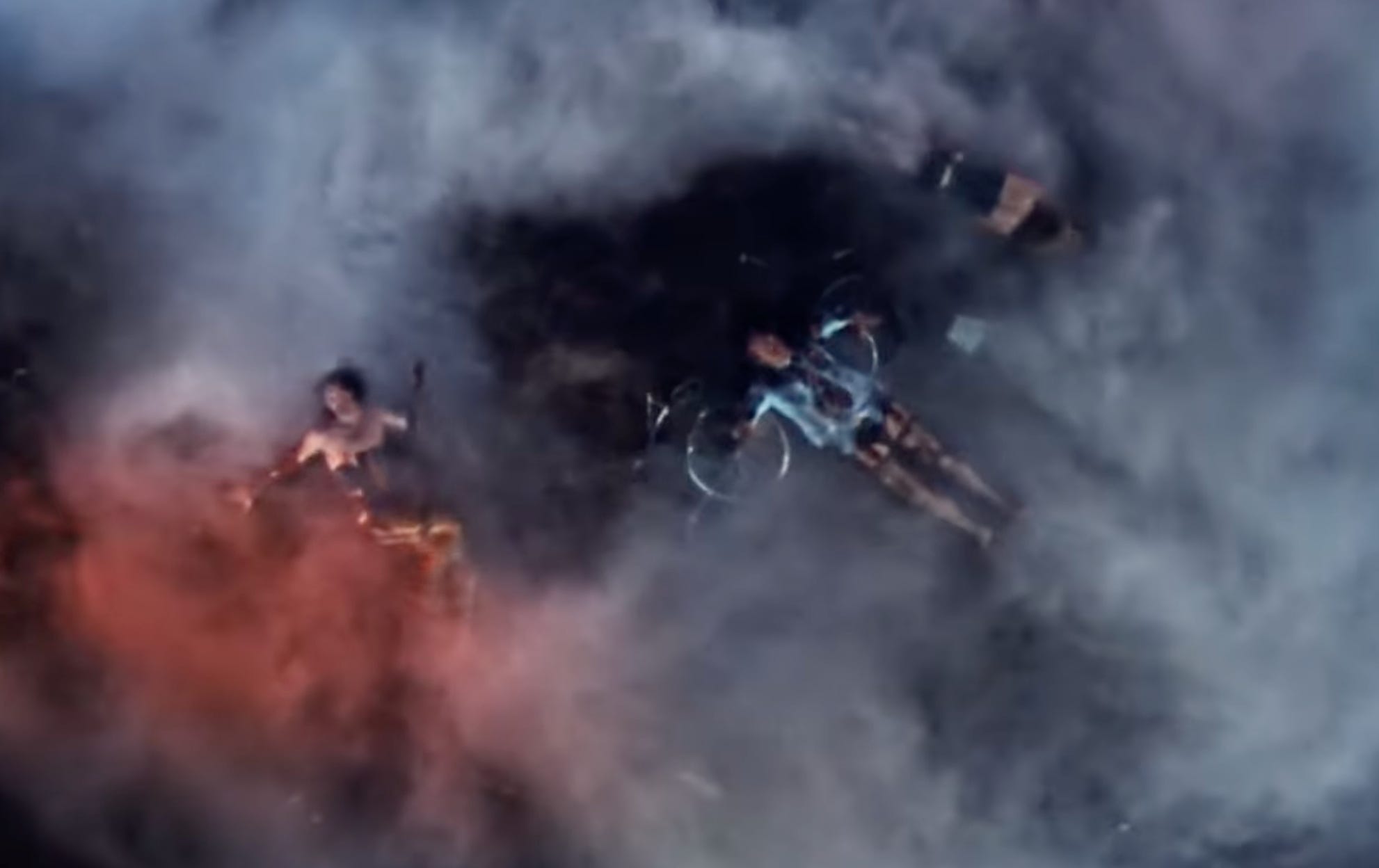
“Come. We must prepare for the floorshow” - Dr Frank-N-Furter
To conclude this series of essays, it is essential to define what a mystery cult is. This is explained succinctly by Peter Mark Adams who states, “The mysteries (Gr. mysteria) were predicted on the providential intervention of a spiritual hierarchy through the archaic mechanism of ritually induced, voluntary possession.” (1) Mystery cults functioned as closed groups that provided the ritual and liturgical knowledge to deliver a profound, life-changing spiritual experience by forging a direct link between the initiate and a specific god. Though these cults reached their zenith in the late classical period, their origins were archaic; rooted in Persia, their influence spread westward with expansions of Hellenistic, and subsequent Roman conquests. Alongside famous cultic centres such as Eleusis, Lemnos and Samothrace that catered for large amounts of mystai, smaller, private sites also existed, Pompeii’s Villa of the Mysteries being the most documented example.
The mystery cults of Mithras in particular were spread widely across the Roman world, reaching as far north as Inveresk, Scotland between 140-165AD. (2) As Adams elucidates, these cultic organisations were of material means, highly motivated, and ritually fluent, providing personal spiritual gnosis for those invited to participate in their rites. This selective exclusivity led to the creation of small, but experienced cells of initiates who could progress through several grades dependent upon their devotion to the cult. Adams’s emphasis on the crucial aspect of “voluntary possession”, is akin to what Curry described as “voluntary schizophrenia”, (3) previously mentioned in the second part of this series. Indeed, the idea of the character of Frank-N-Furter having agency as an independent spirit is one I am sympathetic to, Curry himself recently playing with this idea, stating “I don’t know that Frank is part of a pantheon or anything, but he made his mark and he would have never settled for anything else. And didn’t.” (4)
At this juncture, it appears that it would be inaccurate to claim RHS, or its cinematic counterpart and subsequent shadow-cast versions of the work is an example of a mystery cult based on Adams’s description; the work owes as much to a Judeo-Christian, and contemporaneous pop cultural inheritance as it does to a mythic Greek one. Though the narrative slithers alongside what is a transformative experience for both Brad and Janet, it leaves them beached in the wreckage of what is debatably a botched initiation; flotsam in an ocean of mysterium tremendum, refugees of an aborted process which renders them estranged from their initiation into the freedom of Transylvanian morality, and wildly beyond the boundaries of their native Christian one. This key juxtaposition between the two camps and the sexual illumination of Brad and Janet provides the vast majority of narrative horse-power to the work.
Though mostly used for comic effect, their loss of virginity is framed exclusively from a Judeo-Christian perspective, both characters exclaiming “I was saving myself!” (Janet) and “You tricked me, I wouldn’t have...I’ve never never...never...” (Brad) when they realise they have been duped into an intimate encounter with Frank-N-Furter. It is clear that this technique is deliberately weaponised by O’Brien as a nod to the schlock-horror influence of 1950’s B-movies, which commonly utilised western morality as a plot device. Frequent uses of profiling and othering of antagonists was evident in Hollywood and beyond, with superficial metaphors such as bodily disfigurement, racial, and queer coding, or even utilising horror staples like vampires, werewolves and aliens as foils for social commentary. In regards to the RHS and RHPS, these techniques are exaggeratedly deployed, resulting in their dilution to the point of ridiculousness, bearing the hallmarks of camp rather than actual horror. This is explored by Jonathan Rosenbaum who suggests “there was nothing deeply threatening about the play because there was nothing essentially new in it, merely a conscious reshuffling of cliches that allowed one to see the perverse subtexts in ordinary horror films more easily.” (5) Whilst there may perhaps be “nothing essentially new”, regarding the thanterotic components of RHS and RHPS, the emergent performative aspect in which the work is experienced arguably is; a Trojan horse utilising horror’s transmuted tropes to smuggle the illicit, bacchanal excesses of the Transylvanians.
“I knew he was in with a bad crowd, but it was worse than I imagined...Aliens!” - Dr Scott
Though the ideas explored in Erich von Däniken’s infamous Chariots of the Gods: Was God an Astronaut? (1968) were likely on the extreme periphery of potential influences invoked by O’Brien, these should be also considered alongside the works of contemporaneous artists whose thematic tastes also extended to the alien and the other; camp primogenitor Jack Smith, and countercultural cinematographer Kenneth Anger. The orgiastic scenes of Smith’s Flaming Creatures (1963) and the somnambulistic erotica of Anger’s Magick Lantern Cycle (1947-1980) have both left their subtle signatures upon RHPS. It is also worth noting that O’Brien would later go on to work with Derek Jarman, playing none other than Dr John Dee in Jubilee (1978), further enforcing the relationships between queer art, social commentary, and the role of myth in the cultural milieu of the 1970s. This seam of pop-cultural magic was further mined by O’Brien, who initially suggested the use of black and white film until Brad and Janet are swung into the ballroom, which would then dramatically cut to colour film. This nod to The Wizard of Oz (1939) was never realised in the original release, but does appear in some versions of the DVD release as “the Oz cut”. The physicality of the works of Smith, Anger and Jarman are important to note as it is this particular element that arguably denies the work from being described as a true initiatory experience in the classical sense.
Despite the Transylvanians hailing from the stars, they are not of the stars; having travelled from “the planet Transsexual, in the galaxy of Transylvania”. They may appear alien and otherworldly, but they are very much flesh and blood. It is the raw physicality of the Transylvanians that removes them from the classic framework of the initiatic tradition. Frank-N-Furter is not a god, and there is no hint that he, or the other Transylvanians posses a cosmology that promises knowledge from beyond the material. The twin reins of power Frank-N-Furter holds are chiefly his charismatic sexuality, and advanced alien scientific knowledge. It must also be noted that none of the events leading up to, and including the transformations of Columbia, Rocky Brad, Janet, and Dr Scott during the apogee of the floorshow are voluntary; this is a forced initiation, driven by “a man of little morals...and some persuasion.” If we treat ST as a canonical sequel, (and I do) the results of the floorshow have not succeeded in sexual liberation for either Brad or Janet. The distribution of the revelation is asymmetric, leaving them questioning their relationship and sexual roles, largely emasculating Brad and casting a suggestible Janet adrift into a world of few boundaries. Whilst this imbalance is eventually resolved, it still leaves us to consider that if Frank-N-Furter did initiate them into anything, what was it and why was it so unsuccessful?
Ultimately, Frank-N-Furter fails to deliver anything other than pleasures of the flesh. There is no henosis here. When he languidly croons “don’t dream it, be it” he is telling us to turn away from the dream, the ineffable, the arrheton, and instead towards the material and the knowable. Displays of Frank-N-Furter’s emphasis on the physical are further supported by song, particularly parts one and two of I Can Make You a Man. Yet, for all his superficiality, he delivers this gift, nothing more, nothing less to a collection of ignorant, vulnerable creatures, and for the briefest of moments they are rendered equal in their lusts and affections. Due to the interruption of Riff Raff and Magenta during the heights of the orgasmic, celebratory Wild and Untamed Thing, we’ll never know if Frank-N-Furter and his initiates would ever achieve their happy ending. This tension is interestingly pondered upon by Rosenbaum, who considers “It was as if some of the more liberating aspects of counter-culture and ‘swinging London’ rock and cinephilia, had become attached to a specific dream of sexual liberation - a dream rather than a more explicit invitation to action, because the overall emotional tone of the play, despite the overt violence and kinkiness, exuded tenderness, shyness and innocence of a specifically English variety.” (7) Perhaps, as Rosenbaum suggests, the continual appeal of RHS and RHPS is exactly because we remain safe inside the dream as an audience of voyeurs, whilst the cast continue to play out fantasies that strike chords upon the collective consciousness. From this perspective, we are able to perceive how this work functions not as a mystery cult in the purest sense, but as a secular shadow of one.
“Flow morphia slow, let the sun and light come streaming Into my life,..” - Riff-Raff
However, it is easily arguable that RHS and RHPS follows as part of an emic continuum. Written as a rock and roll entertainment, it is clear that although the work does not aim to provide the audience with a spiritual experience, it undoubtedly provides a transformational one. This is primarily seen in the collective performativity enacted during shows, as well as the sense of community created by the production. This process owes as much to the initial failure of RHPS as it does to the success of RHS; following the disappointing performance of the film in the US, showings were transferred to later, midnight slots, introducing the work to a sympathetic, but raucous crowd. Catalysed through the organically developing litany of audience interaction which famously began at the Waverly Theatre in New York in 1976, this nascent community was also structurally supported by grassroots organisations such as the Rocky Horror Picture Show Fanclub created by Sal Piro in 1977. From this, props, gestures and a roughly codified call and response to the film grew, and continues to develop into the present.
This unique interaction between performance and audience is further aided by the structure of the work. Though the audience is accompanied by the regular interruptions of the narrator in his role as interlocutor, providing an ongoing meta-analysis of the unfolding plot, Frank-N-Furter also regularly breaks the fourth wall, directly addressing the audience. In a homage to the theatre production, this engagement challenges the passive voyeurism and key points in the narrative, most notably before the floorshow when he laments “it’s not easy having a good time. Even smiling makes my face ache.” It is tempting to think that alongside the famous Louis Farese, Jr incident, (6) these small, stylistic nods may have invited screamed commentaries that would go on to define this singular viewing experience.
This performative, orally-transmitted, and participatory set of texts could be argued to be a meta-initiatic liturgy of sorts; an experiential, cohesive, and celebratory. This is further supplemented by a recognisable score, iconic costumery and a signature dance, all of which are well-known outside of a dramaturgical context. Having leaked into popular culture, there is no real secret to this narrative. Yet, the combined result of these within the performative space is the creation of new cult members, and the re-experience of catharsis for those already familiar with the work. This creation of a community of shared experience was commented upon by Rosenbaum as early as 1980, stating “perhaps the most interesting aspect of the Rocky Horror Picture Show cult is the extent to which it evokes and weirdly resurrects, as if in a haunted house, a form of cinema as community that once flourished in the US when Hollywood was still in its heyday.” (7) As mentioned in the third part of this work, the RHPS is the longest continually running film release in human history; it is evidently clear that this work is already more than the sum of its parts. Perhaps Columbia describes this phenomenon best, confessionally singing that her complicated relationship with Frank-N-Furter, “Rose tints my world, keeps me safe from my trouble and pain.”
“The game has been disbanded; my mind has been expanded,..” - Janet
Irrespective of the points against the work functioning as a mystery cult, there are strong reasons to suggest that it operates and functions like one. Structurally, there is a clear initiatory pathway, within both the work itself, as well as performances of it. This is witnessed with particular zeal within the shadow-cast versions of the show. Before proceedings begin, self-identified virgins (those who have never attended a shadow-cast version of RHPS) are paraded upon the stage. In a lampoon echoing the sacrificial role of mola salsa, their foreheads smeared by a lipstick-red V, identifying them as both sacrifice and neophyte. They are then asked to perform various tasks such as synchronised pelvic thrusts, or scream faked orgasms. The initiatory rite ends with them being welcomed back into the audience to participate alongside the congregation, their virginity sacrificed by witnessing the rest of the performance. (8) This ritual sequence mirrors antecedents found in many cultures, albeit reduced to a titilating secular spectacle; yet the structure of an experiential, initiatory process remains fundamentally equivocal. The seeds for what would become of these performances were obviously present at its inception, noted by Curry, who comments in his autobiography “The opening of The Rocky Horror Show was among the most magical experiences I’ve been privileged enough to witness. From the first moment, the production was greeted with more joy and appreciation than we could have imagined. The audience got it. They were immediately a part of the zany, surreal, nostalgic experience. That was the real magic, and it felt supernatural.” (9) Regardless of what exactly it is this work offers, it certainly has a momentum and cultural impact larger than the sum of its parts.
The granular details of any oaths sworn or secrets revealed during archaic mystery rituals remain lost, this information either bound by sacred covenants of silence, or rendered ineffable by the power of the experience over the initiate. This is not the case with some shadow-cast performances of RHPS, in which the virgins swear a pledge with tongue planted firmly in the cheek; an example of which is offered by Kristina Watkins-Mormino, who worked with the shadow-cast of the Lips Down in Dixie in Atlanta in the early 00s. The stated oath precedes the show, with right hand raised and left hand either on the breast or crotch, “I, virgin scum, do hereby admit in front of all these peoples that I am an Rocky Horror virgin, and I wish to lose all my morals and accept decadence into my heart. Yea, though I may walk through the Valley of Hetero-sexuality, I shall fear no Republicans. Give us this day our daily head in the name of Frankie and Rocky and the holy Riff Raff. Klaatu baradu nickto.” (10) Science fiction (double feature) fans will notice the quote from The Day the Earth Stood Still, (1951) an alien phrase uttered by Michael Rennie’s character Klaatu to prevent his robot Gort from causing harm to others. Though an intellectual stretch, it is not hard to see some ancestral connection between these nonsense words and the various nomina barbara, or strings of Greek vowels that were perhaps utilised to invoke spiritual powers during mystery rites.
Though forbidden knowledge is transmitted by Frank-N-Furter, it is achieved through purely physical means. Frank-N-Furter is no interlocutor between the realms of pure creation and his entourage, conferring no spiritual virtues or lessons. In this sense, he is estranged from his ancient mythic components and restrained by Judeo-Christian ones; though having a foot in both mythic narrative camps has benefits. The universe he inhabits is certainly post-pagan, but not quite post-Christian. It is arguable that though his escapades may have rendered him a demi-god in previous mythologies, his narrative arc framed within the the predominantly Christian cultural background of contemporary audiences likens him less to Dionysus, Mithras, or Orpheus, and closer to that of Jesus, a figure that is killed and rises again. Perhaps this is the true epiphany that RHPS offers, that our own sexual subjectivities and libidinous longings, our own “erotic nightmares beyond any measure” remain part of us regardless of how many petit morts experienced. Ben Hixon interrogates the death of Frank-N-Furter in this light, arguing that it is exactly because he leads others into sexual apotheosis amidst “the warm waters of sins of the flesh” before his death justifies his behaviour:
“Rocky Horror is a parody on multiple levels, and just as Rocky himself parodies the masculine normative, the “victory” of the norm is here a parody of normative subjugation, a parody of abjection and its associated exclusion of the queer, and a parody of the texts that pacify queerness. Frank-N-Furter and his queer company are not abjected and excluded, thrown out as unfit and nonnormative, or made to bow down to normative goodness; rather, it is the act of abjection that is itself abjected and excluded. The destruction of Frank and Rocky, and the normative victory it implies, is overpowered by the preceding queer epiphany.” (11)
Disarmed by both Frank-N-Furter’s weaponised charisma and the comedic bawdiness of the plot, the audience’s ability to rationally critique him is incapacitated. Frank-N-Furter fools us all. By all measurements of objective value he should be a pariah figure. He is undeniably an arch-manipulator and amoral predator. Yet, the journey he leads us on results not in his abjection as Hixon highlights, but in his canonisation. Paradoxically, for all his many sins, he dies a martyr, his children cast adrift lost in time, and lost in space, and meaning.
“At the late night, double feature, picture show,..“ - The Usherette
At curtain fall, it is clear that both RHS and shadow-cast version of RHPS possess qualitative antecedents to that of ancient mystery rites, fulfilling social, structural, and performative requirements. In the context of a mass-media age, it is arguably a secular inheritor of such rites at scale, revealing the human requirement for both ritual and community, as well as the elasticity in which these phenomenon manifest. They share a structure, an established, complex ritual of dress, gesture, and liturgy, as well as a decentralised, flexible means of dissemination across several forms of media. Such is the reputation of this cinematic staple, even the notoriously avaricious new owners Disney have made accommodations for repertory screenings to continue into the future.(12) Some have even posited the idea that this acquisition has elevated Frank-N-Furter (alongside the Alien Queen) to the heights of Disney Princess, a position I’m sure he’d be delighted with. (13)
However, it is abundantly clear that outside of subjective experience, neither RHS or RHPS are specifically designed to fulfil the spiritual role of a mystery cult. The very fact it shares a similar shape and form to ancient cultic practice is testament to the unconscious human requirement for mythic narrative, and communual belonging in order to comprehend and experience the world. When Charles Gray as the Criminologist delivers the final existential lines with sombre gravitas, I still cannot fail to shed a tear. These concluding words perfectly underscore the human cost to a fantastical, tragical adventure, with the stomach-lurching conclusion that usurps the traditional structure of the hero’s journey. The final cathartic thresholds of Joseph Campbell’s model brutally denied amidst the swirling transit-beam exit of Magenta and Riff-Raff. Arguably, this violent dislocation from the Transylvanians forces us to accept that we are not built to sustain the experience of either physical or divine bliss for more than a short time; yet that does not prevent us from repeated attempts. This simple truth, this romantic fatalism, packaged in the recycled wrappers of pop-culture is both ridiculous and profound, a Whitman-esque contradiction which continues to provide time(warp)less entertainment to millions via screen and stage every year. And, as the Usherette sings us out with a plaintive reprise, we too will return again and again “To the late night double feature picture show.”
References
(1) Adams, Peter Mark - Ritual & Epiphany in the Mysteries of Mithras -Theion Published 2025 p121
(2) Mithraeum of Inveresk - https://www.mithraeum.eu/monument/331 - Accessed 13/02/2026
(3) Tim Curry interviewed by Mark Caldwell - 22:13 - accessed 03/09/2025
(4) Tim Curry interviewed by Tracy Smith on CBS Morning - 05/09/2025
(5) Rosenbaum, Jonathan - Sight and Sound Spring 1980
(6) The commonly accepted genesis of RHPS interaction was in 1976 Louis Farese, Jr shouted “Buy an umbrella you cheap bitch” at a rain-soaked Janet Weiss.
(7) Rosenbaum, Jonathan - Sight and Sound Spring 1980
(8) Virgin Survival Guide - https://www.nwirockyhorror.com/home/tips-for-virgins - Accessed 29/12/2025
(9) Curry, Tim - Vagabond p71 - Century 2025
(10) Watkins-Mormino, Kristina - Reading Rocky Horror - The Cult and Its Virgin Sacrifice p171 - Palgrave MacMillian 2008
(11) Hixon, Ben - Reading Rocky Horror - In Search of the Authentic Queer Epiphany p187 - Palgrave MacMillian 2008
(12) As Disney Cracks Down on Repertory Screenings, Portland’s Independent Theaters Adapt - https://www.portlandmercury.com/movies-and-tv/as-disney-cracks-down-on-repertory-screenings-portlands-indie-theaters-adapt-27051960/ - Accessed 13/4/2026
(13) Does the ‘Rocky Horror’ re-release make Dr. Frank-N-Furter an official Disney princess? https://uk.news.yahoo.com/does-rocky-horror-release-dr-231952436.html - Accessed 14/6/2026