
The Black Raven
Dr Cummins & Brian Johnson Book Review

There’s a wonderful quote from the late, great Jake Stratton-Kent in which he comments “if you’re up to mastering a language, don’t bother with Hebrew or Latin, go for German or French to tap good source material unavailable in English”.(1) This piece of advice comes poignantly from Stratton-Kent’s last Patreon post, and I imagine he would have been delighted by the wonderfully necromantic work that is The Black Raven, co-written by Dr Al Cummins and Brian Johnson which punches well above its weight considering the relatively short nature of the sampled text itself. Bound in black and bearing the crest of Matthias Corvinus, the manuscript that has inspired this exploration has been translated from the original German, and aside from being a fantastic exemplar of the Faustian grimoire tradition, the Raven contains both treasure hunting material, and fascinatingly, a treatise on ghost-laying techniques. However, there is a catch; the manuscript is fragmentary and contains what appear to be sentences of intriguing magical characters that are as-yet unknown in function. The partial nature of the work relies on any prospective operator being already familiar with conjuration and spirit-work; this however, does not rob the Raven from any utility to either the novice magician or scholar. Indeed, the essays that contextualise and elucidate upon its content provide superb background to the Faustian corpus and wider cultural comprehension of early modern attitudes towards both magic and the place of the dead within it.
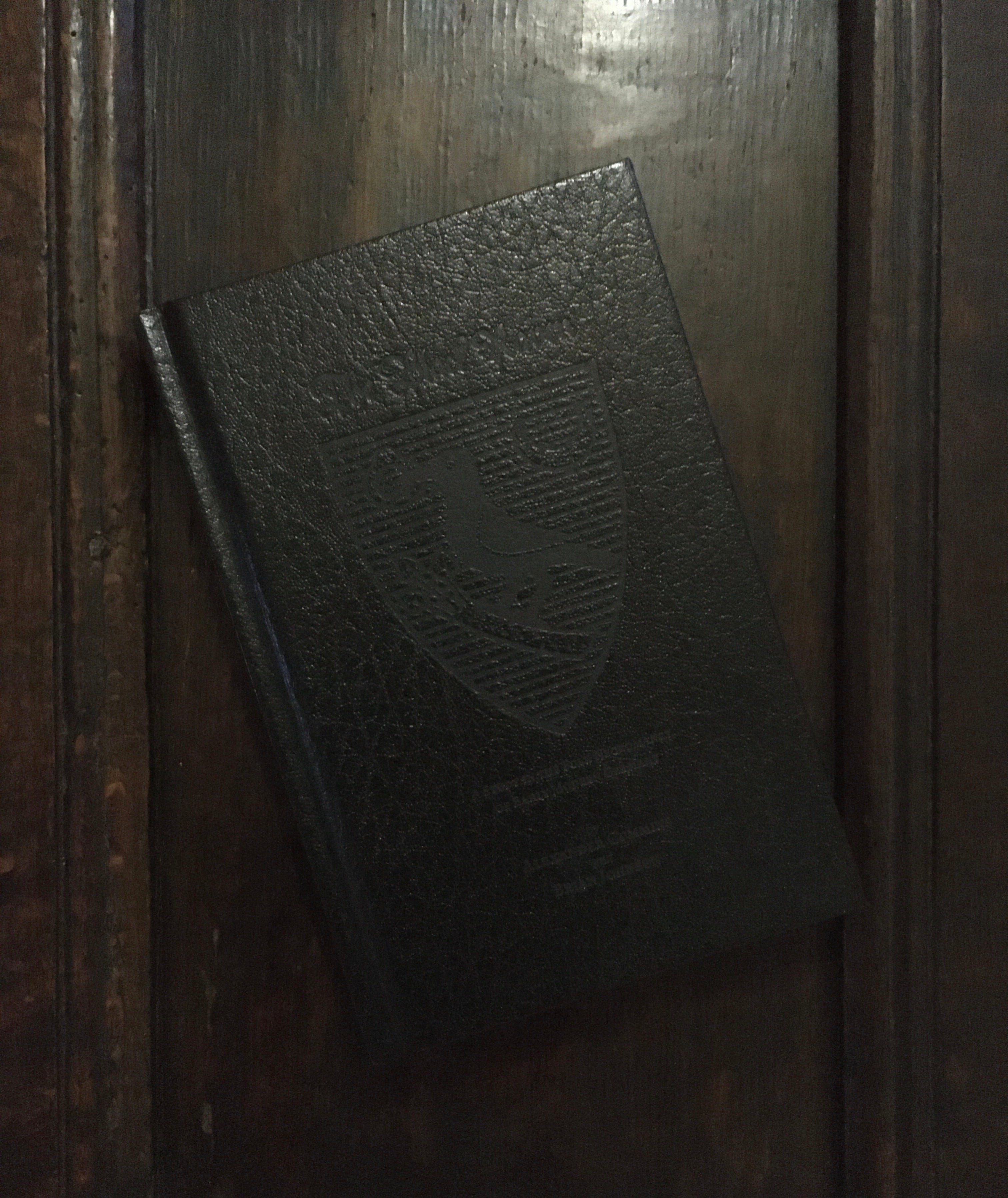
Following a brief introduction, the book opens with a complete translation of the text itself in both modern English and German, pursued on black wings by an accompanying facsimile of the original manuscript with the ensuing substantial commentaries by Dr Cummins and Johnson forming the meat of the work. As translator, Johnson’s essay introduces the figure of the Stammgeist - the spirit of a deceased person tied to a specific location. What follows is an eloquent exploration of the history and nature of ghosts and their role in magical practice, highlighting the changing attitudes in regard to conceptions of purgatory during the Reformation, and how magical practitioners adapted to these celestial and chthonic shifts. Having provided the context for the translation, the operative nature of the text is considered in depth by Dr Cummins, who sequentially analyses the materia and means of approaching the text as a practical working book. Due to the partial nature of the work, there is a good deal of comparison across similar texts to aid in a sympathetic reconstruction. This in itself is a strong introduction to similar, more expansive works and provides the reader with plenty of inspiration to both comprehend and commune with the material. Particular highlights of this essay include commentary on the dramatis personae of the spirits called upon, which features some familiar names within Faustiana, as well as solid no-nonsense advice for any prospective necromancer.
Whilst most grimoires and books of magic deal in what is often jokingly reduced to getting paid and laid, the Raven not only concerns itself with the former acquisitory element of treasure hunting, but also with the latter techniques of laying - ghosts that is. This is where I personally feel the greatest value in this tome lies. It is remarkably forward thinking in regards to approaching the restless dead from charitable directions, aiming to solve hauntings through compassion, communication and compromise. Problematic hauntings are not seen from a simplistic binary position, on the contrary, the Raven encourages a relational response to the once corporeal souls who require empathy and assistance to navigate their post-mortem predicaments. In a world where contemporary conversations concerning the dead are as clear as the poor night-vision footage presented in the majority of ghost hunting media, the Raven offers a bright spark of genuine humanity and salvific empathy against the usual juvenile hysteria. Corvids are well known for their proclivity for shining objects, but as Dr Al reminds us, the raven is also a carrion bird. Despite not being a self-contained or indeed a complete grimoiric system, the dual aspects of this midnight-plumed passerine wonderfully overlap to the themes of this book. Though fragmentary like the broken links of a silver chain, the contents offer both inspiration and intrigue for those who have yet to work with such material, and method and mystery for those with some experience.
(1) - My advice to young occultists - Jake Stratton-Kent - Patreon post 05/05/2022
This makes me want to read this book.